
The Mechanics of Modern PDF Management: How In-Browser Merging & Compression Optimize Digital Workflows
Published on 21 Agustus 2026

The Fragmentation of Digital Documentation
In corporate environments, academic research, and legal operations, the Portable Document Format (PDF) remains the global standard for document exchange. However, managing PDF assets often creates severe operational friction. Professionals frequently receive scattered document pages, oversized email attachments, and unoptimized reports from multiple sources.
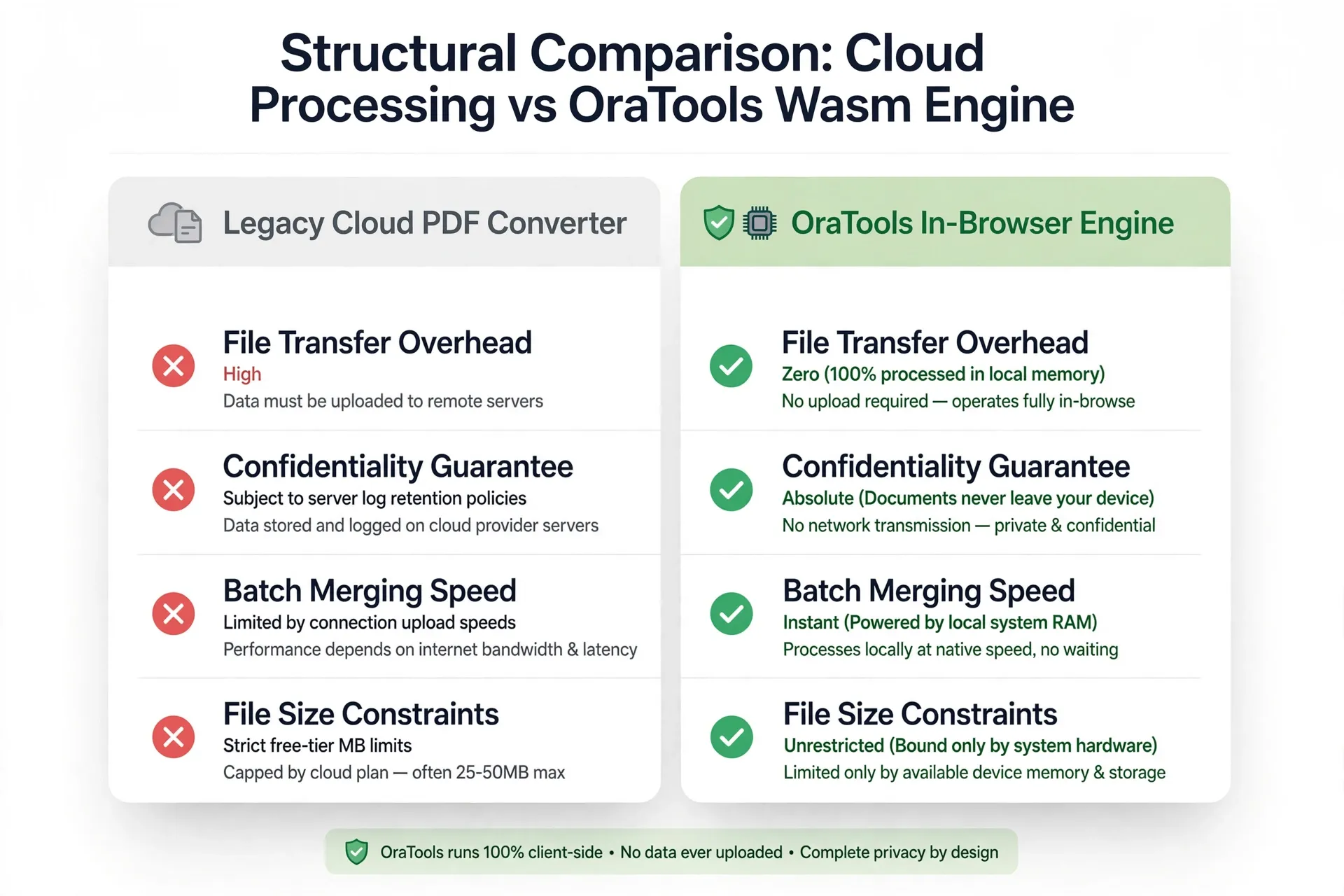
To consolidate these assets, users traditionally rely either on expensive software licenses or basic online conversion portals. The primary bottleneck of basic web tools lies in their server-centric architecture: uploading large, multi-page PDFs to external cloud servers causes bandwidth congestion, processing queues, and potential data exposure risks for confidential files.
From an SEO and Google AdSense review perspective, publishing generic articles that simply state "How to combine PDFs online" often results in Low Value Content rejections. High-value technical writing must address the structural challenges of document compilation, file structure overhead, stream compression, and privacy-first local processing frameworks.

Client-Side PDF Compilation and Stream Compression
Instead of transferring heavy files over public networks, modern browser engines leverage WebAssembly (Wasm) to parse, compile, and compress PDF structures locally within system RAM.
OraTools utilizes client-side PDF processing engines to modify document cross-reference tables (XRef), merge page trees, and re-compress embedded image streams directly on your device.
Core Stages of In-Browser PDF Processing:
-
Structure Parsing: The browser reads the document catalog, page trees, and indirect objects locally without network transmission.
-
Object Merging & Stream Optimization: Duplicate font dictionaries are removed, and redundant metadata streams are purged to streamline file architecture.
-
Lossless Content Stream Compression: Embedded image objects are re-encoded using modern Flate/DCT compression algorithms directly via local CPU cores

Establishing an Efficient, Privacy-First Document Workflow
Integrating localized PDF tools into your daily routine eliminates productivity bottlenecks while reinforcing corporate data compliance (such as GDPR and HIPAA standards).
Operational Advantages for Digital Workflows:
All-in-One Utility Integration: Seamlessly transition from merging contract pages to compressing final outputs and converting formats without leaving a single clean workspace.
Zero Registration Obstacles: Execute complex document editing instantly without subscription paywalls or account registration delays.
Cross-Device Continuity: Enjoy identical performance and security whether working on a desktop workstation, tablet, or smartphone browser.
Manage Your PDFs Privately:
Stop uploading confidential documents to remote cloud servers. Visit OraTools to merge, split, and compress your PDF files instantly, safely, and completely free in your browser.